
Freight Rates on Popular Routes Surge Nearly Six Times Year-on-Year
“Right now, I dare not guess whether shipping prices will fall, nor do I want to face whether they will rise tomorrow—I’ve become numb,” said Yang Zhonghua, a freight forwarder with over ten years of experience in Guangxi, in an interview with The Paper.
Among global popular routes, data from the Freightos Baltic Index, checked by The Paper as of August 27, showed that ocean freight rates from China/Southeast Asia to the US East Coast—after falling for a week from a high of $20,636 per FEU (40-foot equivalent unit) in early August—rebounded back above the $20,000 threshold, standing at $20,057 per FEU, up 5% week-on-week. Rates from China/Southeast Asia to the US West Coast also continued rising after a dip, hitting $18,425 per FEU, a 5% week-on-week increase.
Although rates on China-US routes saw short-term declines, they have surged five to six times compared to the $3,000+ per FEU recorded in August last year.
Rates from China to Northern Europe and the Mediterranean also began rising last December. After a slight pullback in early April this year, they surged again. As of August 27, rates stood at $13,889 per FEU for China-Northern Europe and $12,902 per FEU for China-Mediterranean routes.
Additionally, data from the Shanghai Shipping Exchange showed the global mainline schedule reliability index fell to 18.90% in July, down 4.44% year-on-year, indicating persistent capacity shortages on international routes.
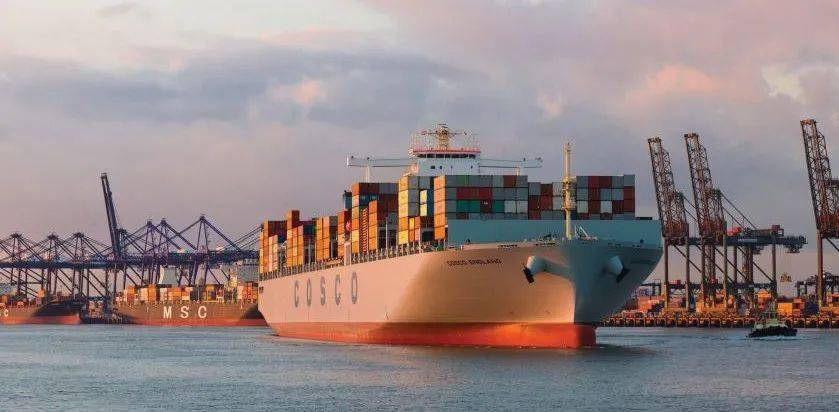
Currently, Southeast Asian countries including Vietnam and Malaysia have implemented lockdowns due to the pandemic, with some ports suspending operations. Severe congestion plagues major global ports—including Houston, Miami, Los Angeles and Baltimore in the US, and Hamburg and Rotterdam in Europe—drastically reducing the number of container ships available for normal rotation compared to pre-pandemic levels.
On the market’s historic surge, Yin Jingbo, associate professor at the Department of Transportation Engineering, Shanghai Jiao Tong University, told The Paper: “Shipping rates are closely tied to market supply-demand dynamics and transport market structure.”